
PP (Polypropylene) Plastic Material - Lightweight and Flexible Plastic
PP (Polypropylene) is a lightweight, semi-crystalline thermoplastic known for its excellent chemical resistance, fatigue resistance, flexibility, and cost-effective processing.
One of PP’s most distinctive advantages is its ability to withstand repeated flexing, making it a preferred material for living hinges, snap-fit features, caps, closures, containers, and flexible molded components.
Why Choose Polypropylene?
Polypropylene offers a distinctive combination of low weight, flexibility, chemical resistance, and fatigue performance.
For products requiring repeated bending or integrated flexible features, PP can provide capabilities that many rigid engineering plastics cannot.
Maidder supports custom polypropylene parts through injection molding, CNC machining, and prototype manufacturing, helping customers select the right PP grade and process from design validation to mass production.
Excellent Fatigue Resistance
PP can withstand repeated flexing without quickly cracking or failing.
Excellent Chemical Resistance
Polypropylene provides good resistance to many acids, bases, and chemical solutions.
Lightweight
PP has a low density, helping reduce product weight while maintaining useful toughness and mechanical performance.
Low Moisture Absorption
Polypropylene absorbs very little moisture, making it suitable for products used in humid, wet, or fluid-contact environments.
Good Electrical Insulation
PP also provides good electrical insulating properties for selected electrical and electronic applications.
When Should You Choose PP?
Polypropylene is a strong candidate when your product requires several of the following:
- Living hinges
- Repeated bending
- High fatigue resistance
- Chemical resistance
- Low moisture absorption
- Lightweight construction
- Snap-fit features
- Cost-effective mass production
PP is particularly attractive when the material itself can simplify the product design—for example, replacing a separate hinge and fasteners with a single molded living hinge.
Types of Polypropylene
Not all polypropylene materials perform the same way.The two most common categories are PP Homopolymer and PP Copolymer.
PP Homopolymer
PP Homopolymer is the most common general-purpose polypropylene grade.
- Higher stiffness
- Good strength-to-weight ratio
- Good chemical resistance
- Excellent fatigue resistance
- Good processing performance
- Containers
- Household products
- Caps
- Industrial components
- Rigid molded parts
PP Copolymer
PP Copolymer adds ethylene to boost impact and flexibility.
- Better impact resistance
- Improved toughness
- Better low-temperature performance
- Increased flexibility
- Automotive components
- Impact-resistant containers
- Consumer products
- Flexible components
- Durable housings
Have a PP Part Ready for Manufacturing?
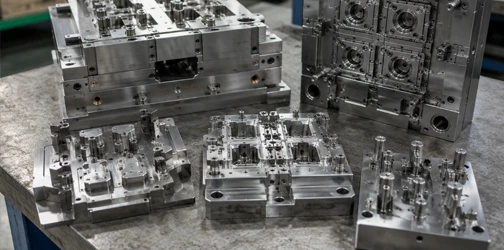
Whether your design requires a living hinge, snap-fit structure, chemical-resistant component, or high-volume molded product, Maidder can help evaluate the right PP grade, manufacturing process, and mold design.
The Signature Feature of PP: Living Hinges
One of the strongest reasons engineers choose polypropylene is its suitability for living hinge design.
A living hinge is a thin flexible section connecting two thicker sections of a molded part, allowing them to open and close repeatedly without requiring a separate mechanical hinge.
A properly designed PP living hinge can simplify a multi-component assembly into a single injection molded part.
- Flip-top bottle caps
- Storage containers
- Packaging closures
- Tool cases
- Consumer product lids
- One-piece folding components
- Part count
- Assembly operations
- Fasteners
- Manufacturing cost
- Product complexity
Why Is PP Good for Living Hinges?
Polypropylene combines the characteristics needed for repeated bending:
- High fatigue resistance
- Good flexibility
- High elongation
- Good melt flow
- Suitable balance between stiffness and flexibility
However, material selection alone does not guarantee a durable living hinge.
Part geometry and mold design are equally important.
Manufacturing Options for PP Plastic Parts
Polypropylene can be manufactured using several processes, but the ideal method depends on quantity, geometry, tolerances, and the stage of product development.
- Injection Molding → primary production process
- CNC Machining → prototype and low-volume process
- 3D Printing → early functional validation
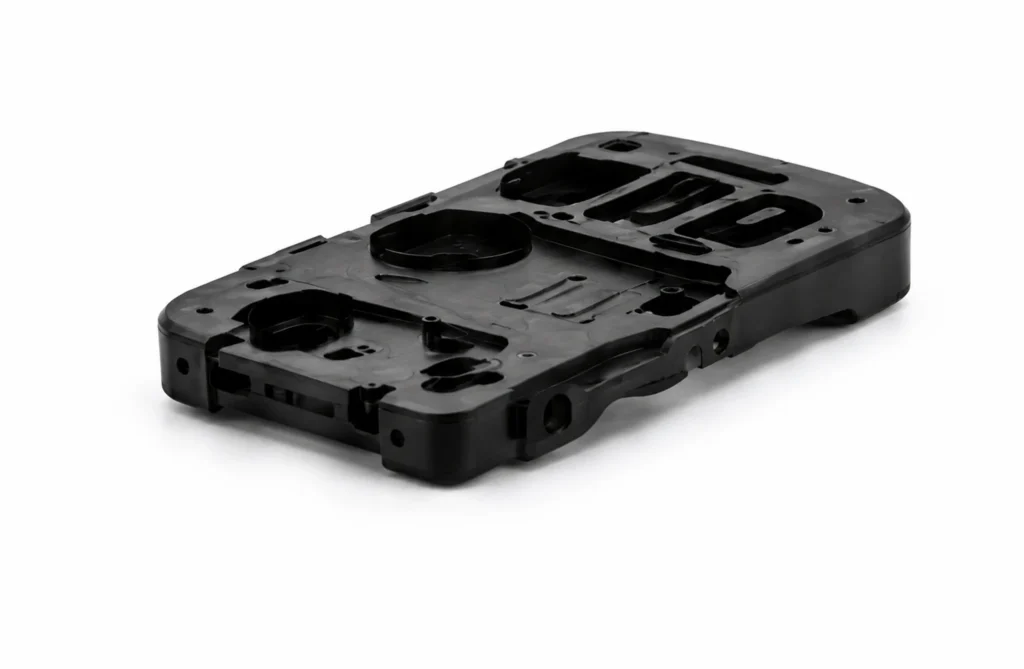
PP Injection Molding
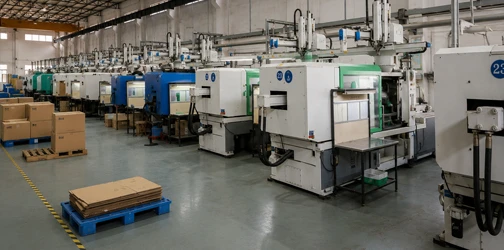
Injection molding is the most important manufacturing process for polypropylene parts.
Its good flow characteristics, low material cost, flexibility, and fatigue resistance make PP especially suitable for high-volume molded products.
- Living hinges
- Caps and closures
- Containers
- Snap-fit parts
- Consumer products
- Automotive components
- Medical and laboratory components
- Industrial parts
- High-volume production
- Excellent production efficiency
- Low material cost
- Complex molded geometries
- Integrated living hinges
- Snap-fit capability
- Good chemical resistance
- Custom color options
- Low unit cost at scale
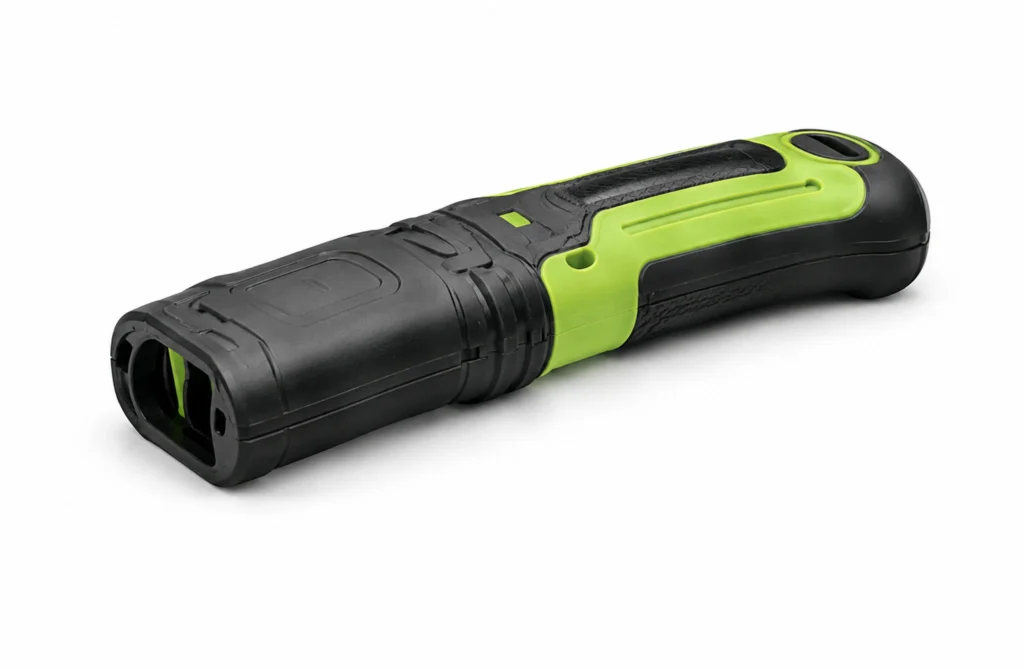
PP CNC Machining
Polypropylene can also be CNC machined for prototypes, functional components, and low-volume parts.
- Functional prototypes
- Chemical-resistant components
- Fixtures
- Laboratory parts
- Industrial components
- Low-volume custom parts
- No mold tooling required
- Fast design iteration
- Suitable for low quantities
- Good chemical resistance
- Useful for functional testing
However, PP is softer and more flexible than plastics such as POM or PMMA.
Heat generated during machining can also affect surface quality and dimensional accuracy, so appropriate tooling, feeds, speeds, and workholding are important.
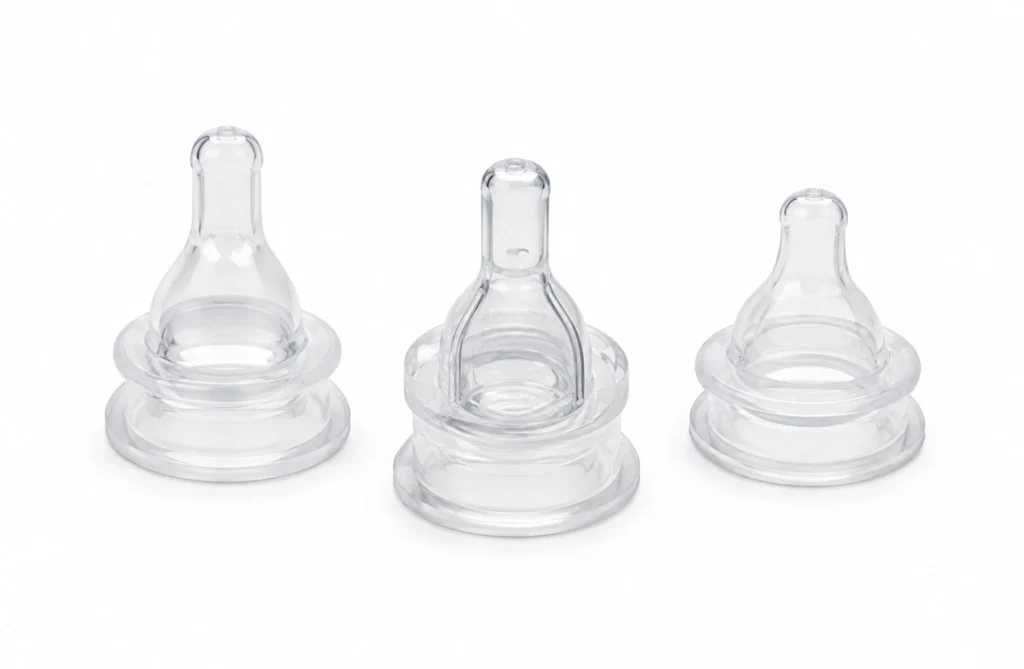
PP 3D Printing
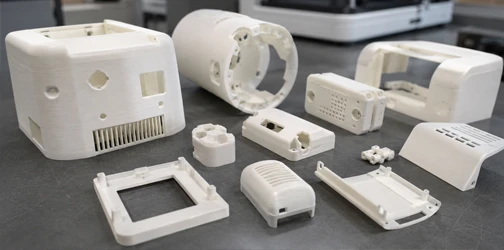
Polypropylene can be 3D printed for functional prototypes when engineers want to evaluate material-like flexibility, lightweight structures, snap features, or product concepts before production tooling.
- Functional prototypes
- Flexible product concepts
- Snap-fit testing
- Snap-fit testing
- Lightweight components
- Design iteration
- No tooling required
- Fast prototype iteration
- Complex geometry capability
- Useful functional testing
- Supports early design validation
Choosing the Right Process for PP Parts
Although both materials belong to the PE family, HDPE and LDPE serve different design requirements.
Choose 3D Printing When:
You need fast concept validation, functional prototypes, or multiple design iterations without tooling.
Choose CNC Machining When:
You need low quantities, machined PP material, simple mechanical components, or functional validation without mold investment.
Choose Injection Molding When:
You need production quantities, living hinges, integrated snap features, complex molded geometries, or competitive unit costs at scale.
A typical product development route may be:
The exact route depends on how closely prototype material behavior needs to match the final molded product.
01
3D Printed Prototype
02
CNC / Functional Validation
03
Injection Mold
04
PP Mass Production
Common Applications of PP Plastic
Packaging, Caps & Closures
Polypropylene is particularly well suited to:
- Flip-top caps
- Hinged lids
- Containers
- Closures
- Packaging components
Its fatigue resistance enables one-piece designs with integrated living hinges.
Consumer Products
Typical applications include:
- Storage containers
- Household products
- Kitchen products
- Reusable boxes
- Furniture components
- Product housings
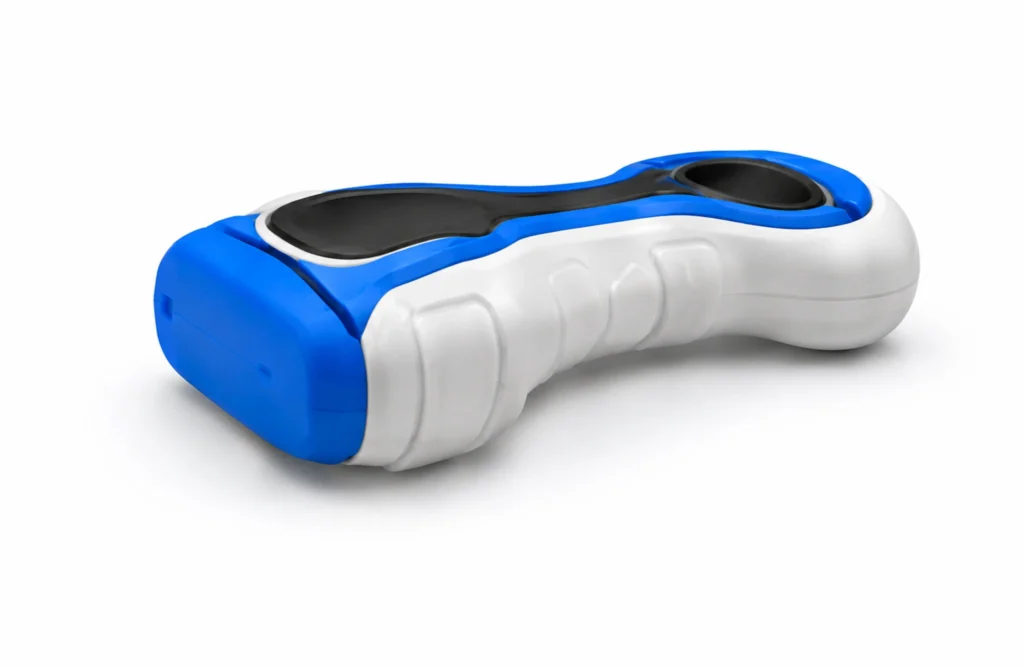
Automotive Components
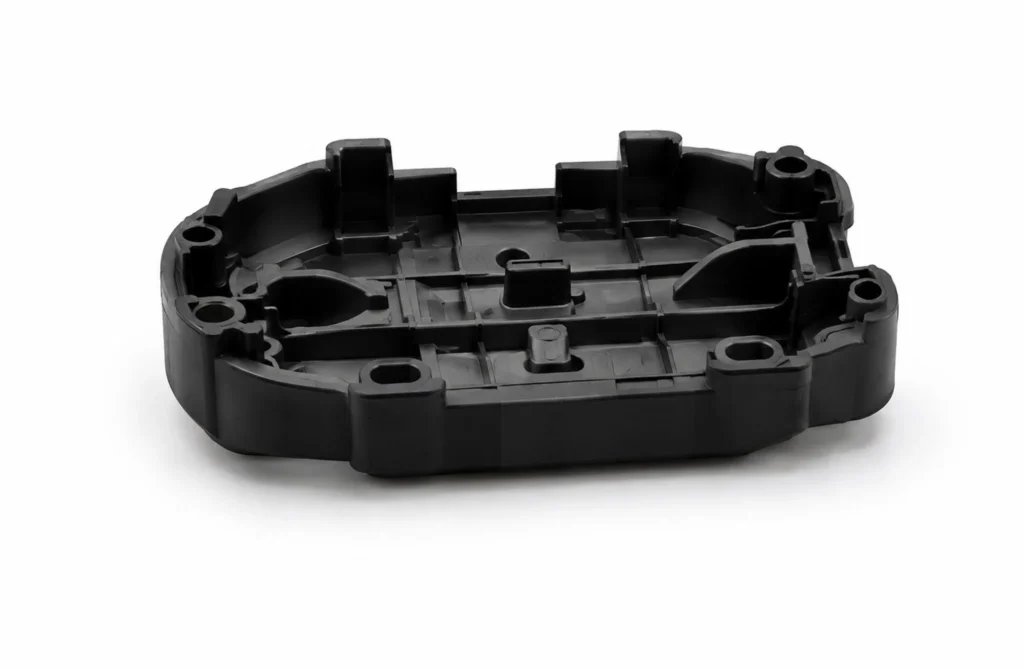
PP and modified PP grades are widely used for:
- Interior components
- Trim
- Covers
- Housings
- Brackets
- Automotive storage components
Its low density can help reduce component weight.
Medical & Laboratory Products
Suitable PP grades are commonly used for products such as:
- Laboratory containers
- Pipette-related components
- Sample containers
- Medical packaging
- Selected device components
Material grade and regulatory requirements must be verified for the specific application.
Industrial & Chemical Applications
PP can be used for:
- Chemical-resistant components
- Tanks and containers
- Fluid-handling parts
- Equipment components
- Protective housings
PP vs PE: Which Material Should You Choose?
PP and PE are closely related polyolefin plastics, but they are not interchangeable.
- Living hinges are required
- Repeated flexing is important
- Higher stiffness is preferred
- Closures
- Moderate heat resistance is required
- Snap-fit features are used
- Low-temperature toughness is important
- A softer or more flexible material is required
- Excellent moisture resistance is critical
- HDPE or LDPE characteristics better match the application
PP vs Other Plastic Materials
PP vs ABS
Choose PP for chemical resistance, lightweight components, living hinges, and repeated flexing.
Choose ABS for rigid housings, cosmetic appearance, easier painting, and higher surface-quality requirements.
PP vs POM
Choose PP for flexible components, chemical resistance, living hinges, and cost-sensitive high-volume products.
Choose POM for precision gears, bearings, low-friction mechanisms, and better dimensional stability.
PP vs Nylon
Choose PP when low moisture absorption, chemical resistance, lightweight design, and cost are priorities.
Choose Nylon when higher mechanical strength, wear resistance, and structural performance are required.
PP Surface Finishing and Bonding
Polypropylene has low surface energy.
This provides useful chemical and moisture resistance, but it also makes conventional:
- Painting
- Printing
- Adhesive bonding
- Coating
more difficult than with plastics such as ABS.
Depending on the application, PP parts may require:
- Surface pretreatment
- Specialized primers
- Compatible adhesives
- Mechanical fastening
- Snap-fit assembly
- Welding processes
For products requiring extensive cosmetic painting or adhesive assembly, this should be considered during material selection.
FAQs
What is PP plastic?
PP stands for Polypropylene, a lightweight semi-crystalline thermoplastic known for chemical resistance, fatigue resistance, flexibility, low moisture absorption, and cost-effective processing.
What is polypropylene used for?
PP is commonly used for living hinges, caps, closures, containers, automotive components, household products, laboratory products, snap-fit parts, and industrial components.
Is polypropylene good for injection molding?
Yes. PP is one of the most widely used injection molding materials because of its good flow characteristics, flexibility, chemical resistance, and competitive material cost.
Why is polypropylene used for living hinges?
PP combines excellent fatigue resistance with flexibility and high elongation, allowing properly designed thin hinge sections to withstand repeated bending.
What is the difference between PP and PE?
PP generally provides greater stiffness, heat resistance, and fatigue performance, while PE grades often provide better low-temperature toughness and a broader range of flexible material options.
Can polypropylene be CNC machined?
Yes. PP can be CNC machined for prototypes and low-volume functional parts, although its softness and tendency to generate heat during machining require appropriate process control.
Can polypropylene be 3D printed?
Yes. PP can be 3D printed for functional prototypes and design validation, although shrinkage and warping make it more challenging to print than some common prototype materials.
Is polypropylene chemical resistant?
PP provides excellent resistance to many acids, bases, and other chemicals. Compatibility should still be verified against the exact chemical, temperature, concentration, and PP grade.
Is PP suitable for food-contact applications?
Certain PP resin grades are designed for food-contact applications. Compliance depends on the specific resin, additives, colorants, manufacturing process, and target-market regulations.
Is PP easy to paint or glue?
Not usually. PP has low surface energy, making conventional painting and adhesive bonding difficult without suitable pretreatment, primers, adhesives, or alternative assembly methods.
Contact Us
Have a product idea or manufacturing requirement? Our engineering team supports you from product development and rapid prototyping to custom injection molds, injection molding and mass production. Share your CAD files, drawings or project details, and we’ll help define the right solution.