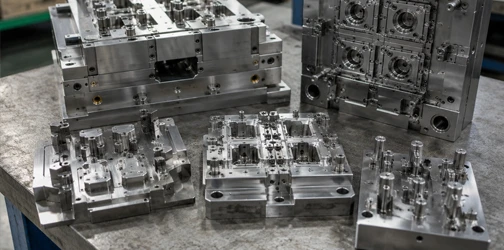

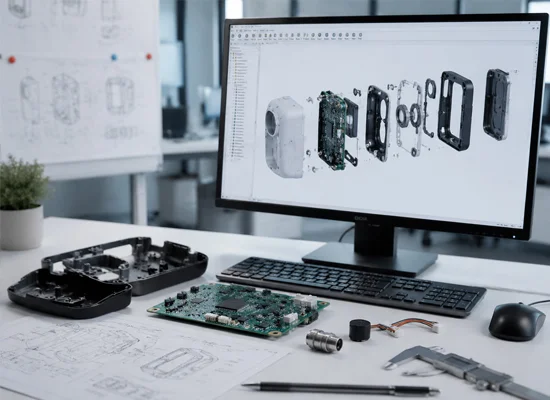
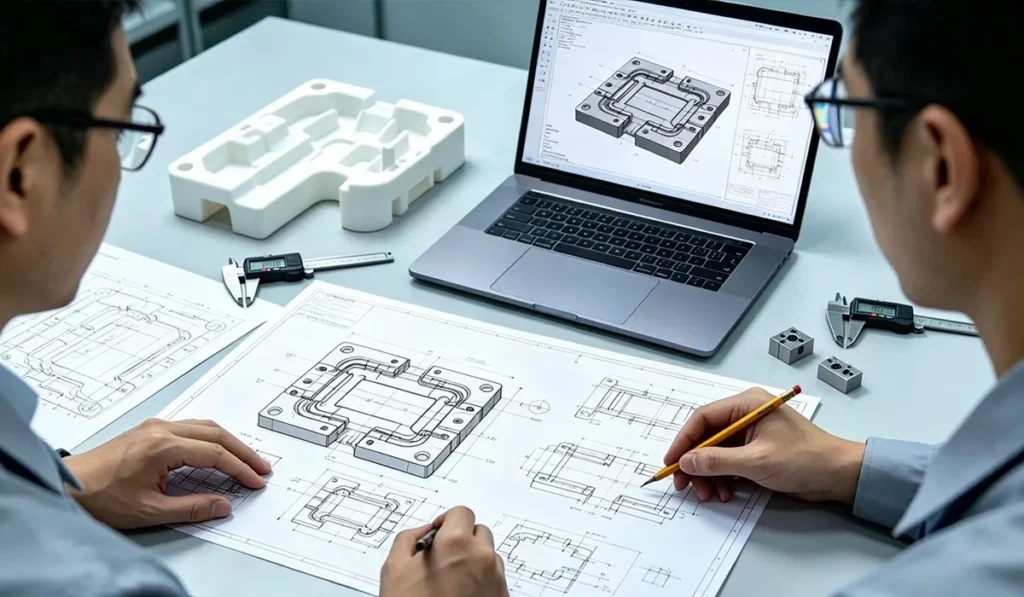
A practical guide to materials, process parameters, defect prevention, quality control and scalable manufacturing. This white paper explains how injection molding moves from initial setup and mold trials to a stable manufacturing process.
From Process Setup to Stable Production
A Practical Guide to Materials, Process Parameters, Defect Prevention, Quality Control and Scalable Manufacturing
Executive Summary
Producing one acceptable molded part is relatively straightforward. Producing thousands—or millions—of consistent parts requires controlled materials, tooling, process parameters and quality systems.
This white paper explains how injection molding moves from initial setup and mold trials to a stable manufacturing process.
It focuses on the variables that directly affect quality, repeatability, cycle time and production efficiency.
01. Understand the Injection Molding Cycle
A typical injection molding process follows:
Material Preparation → Plasticizing → Injection → Packing & Holding → Cooling → Mold Opening →Ejection →Inspection
Every stage can influence the finished product.
02. Material Preparation
Stable production starts before plastic enters the barrel.
Resin Selection
Use the approved production material and grade.
Material Drying
Hygroscopic materials may require controlled drying before molding.
Incorrect moisture levels can affect appearance and mechanical properties.
Color Control
Color masterbatch or compounded resin should be managed consistently across production batches.
Regrind Control
If regrind is permitted, its percentage and handling should be controlled according to product requirements.
Traceability
Production records should link finished products with relevant material batches where required.
03. Key Injection Molding Parameters
Injection molding quality is created by a controlled combination of variables.
Melt Temperature
Affects viscosity, filling behavior and material degradation risk.
Mold Temperature
Influences flow, surface quality, cooling and dimensional behavior.
Injection Speed
Affects how material flows through the cavity.
Injection Pressure
Provides the force required to fill the cavity.
Holding Pressure
Compensates for material shrinkage after filling.
Holding Time
Controls how long packing pressure is applied.
Cooling Time
Influences cycle time, dimensional stability and deformation.
Back Pressure
Affects melt preparation and mixing.
Screw Speed
Influences plasticizing and material preparation.
04. Understand Parameter Relationships
Individual settings should not be considered in isolation.
For example:
Melt Temperature
→ Material Flow
→ Filling
→ Appearance
Holding Pressure
→ Shrinkage
→ Sink Marks
→ Dimensions
Cooling
→ Cycle Time
→ Warpage
→ Dimensional Stability
Stable molding requires a controlled process window rather than constant trial-and-error adjustments.
05. Common Injection Molding Defects
Sink Marks
Possible Causes
- Excessive local wall thickness
- Insufficient packing
- Poor cooling
Engineering Actions
- Review wall thickness
- Improve packing conditions
- Evaluate cooling
Warpage
Possible Causes
- Uneven shrinkage
- Unbalanced cooling
- Part geometry
- Material orientation
Engineering Actions
- Review product geometry
- Evaluate cooling balance
- Optimize process conditions
- Use simulation where appropriate
Short Shot
Possible Causes
- Insufficient flow
- Restricted gate
- Poor venting
- Inadequate pressure
Engineering Actions
- Evaluate flow path
- Review gate/runner
- Check venting
- Optimize molding parameters
Weld Lines
Possible Causes
Separate melt fronts meeting during cavity filling.
Engineering Actions
- Evaluate gate location
- Optimize flow
- Review temperature
- Consider geometry changes
Flash
Possible Causes
- Tooling fit
- Excessive pressure
- Insufficient clamping
- Mold wear
Engineering Actions
Determine whether the root cause is process- or tooling-related before correction.
06. Defect Troubleshooting Matrix
| Defect | Design | Tooling | Material | Process |
| Sink Marks | ✓ | ✓ | ✓ | |
| Warpage | ✓ | ✓ | ✓ | ✓ |
| Short Shot | ✓ | ✓ | ✓ | ✓ |
| Weld Lines | ✓ | ✓ | ✓ | ✓ |
| Flash | ✓ | ✓ | ||
| Burn Marks | ✓ | ✓ | ✓ | |
| Flow Marks | ✓ | ✓ | ✓ | ✓ |
The purpose of troubleshooting is not simply to change machine parameters. It is to identify the root cause.
07. Establish a Stable Process Window
Stable injection molding should move from:
Trial-and-Error
to:
Controlled Process Development
A practical approach is:
Establish Baseline → Identify Critical Parameters → Determine Acceptable Process Window → Validate Parts →Record Approved Settings → Control Production Variation
This improves repeatability between shifts, machines and production batches.
08. Control Dimensional Quality
Plastic parts change dimensions due to:
- Material shrinkage
- Mold temperature
- Packing
- Cooling
- Geometry
- Material behavior
Critical dimensions should therefore be identified before production.
Dimensional Control Can Include
- First article inspection
- 2D measurement
- CMM inspection
- Gauges
- Fixture inspection
- Critical dimension sampling
Not every dimension requires the same inspection frequency. Inspection plans should prioritize features that affect product function and assembly.
09. Control Cosmetic Quality
Appearance requirements should be defined before mass production.
Common cosmetic concerns include:
- Weld lines
- Flow marks
- Sink marks
- Gate vestige
- Ejector marks
- Scratches
- Color variation
- Gloss differences
- Texture inconsistency
A Golden Sample can provide a practical visual reference for approved appearance.
10. Build Quality Into the Production Process
Quality control should occur throughout manufacturing—not only after production is complete.
Incoming Material Control
Verify approved material and relevant batch information.
First Article Inspection
Confirm production setup before full-scale manufacturing.
In-Process Inspection
Monitor critical dimensions, appearance and process stability.
Final Inspection
Verify finished products against agreed specifications.
Traceability
Maintain production and inspection records according to project requirements.
11. Move From Pilot Run to Mass Production
Production should scale progressively.
Prototype / Engineering Run
Primary Goal: Validate design and functionality.
Pilot Production
Primary Goal: Validate tooling, process and inspection methods.
Ramp-Up
Primary Goal: Validate capacity and production consistency.
Mass Production
Primary Goal: Maintain quality, efficiency and repeatability.
Jumping directly from T1 samples to large-volume production increases manufacturing risk.
12. Secondary Operations & Assembly
Many plastic products require more than molding.
Typical post-molding operations include:
- Silk screen printing
- Pad printing
- Laser engraving
- Painting
- Ultrasonic welding
- Heat staking
- Insert installation
- Product assembly
- Functional testing
- Packaging
When molding, secondary operations and assembly are considered together, product teams can reduce handling complexity and improve final-product consistency.
13. Optimize Production Cost
Injection molding cost is affected by more than resin price.
Major Cost Drivers
Cycle Time
Longer cycles reduce machine productivity.
Cavity Count
More cavities may increase tooling investment while reducing unit production cost at sufficient volume.
Scrap Rate
Defects and unstable processes increase material and labor costs.
Automation
Appropriate automation can improve consistency and productivity.
Secondary Operations
Painting, printing, welding and assembly add process steps.
Material
Engineering plastics can significantly affect part cost.
Production Volume
Tooling and automation strategies should reflect lifecycle demand.
The best manufacturing strategy optimizes total lifecycle cost, not one isolated cost item.
14. Production Readiness Checklist
Before stable mass production begins:
☐ Production mold approved
☐ Production material approved
☐ Golden sample approved
☐ Critical dimensions confirmed
☐ Process parameters established
☐ Inspection method approved
☐ Cosmetic standards confirmed
☐ Assembly requirements validated
☐ Secondary operations validated
☐ Packaging approved
☐ Capacity confirmed
☐ Traceability requirements established
15. Continuous Improvement After Launch
Mass production is not the end of engineering.
Production data can be used to identify opportunities for:
- Cycle-time reduction
- Scrap reduction
- Process optimization
- Mold maintenance
- Automation
- Quality improvement
- Cost reduction
A stable product lifecycle requires ongoing cooperation between tooling, molding, quality and project teams.
Final Takeaway
Stable Production Is Engineered
Reliable injection molding depends on the interaction of:
Product Design + Material + Mold + Process + Quality Control
Controlling these elements together enables manufacturers to move from successful trial parts to repeatable, scalable production.
Preparing for Injection Molding Production?
Share your product requirements, CAD files and expected production volume with Maidder’s engineering team.