
Two-Shot Injection Molding Services for Multi-Material Plastic Parts
Combine two materials, colors, or functional properties into one integrated injection-molded component.
Maidder provides two-shot injection molding services, also known as 2K molding, for products requiring rigid and soft materials, multiple colors, integrated sealing, improved grip, or other functional combinations.
Why Use Two-Shot (2K) Injection Molding?
Two-shot molding integrates multiple materials or colors directly during the injection molding process.Compared with manufacturing separate components and assembling them afterward, 2K molding can improve repeatability, product integration, appearance, and production efficiency.
Using specialized two-shot tooling and molding equipment, two materials are injected sequentially within a coordinated molding cycle, reducing separate assembly steps and improving part consistency.Our engineering, tooling, and molding teams support the complete process from material selection and DFM to 2K mold manufacturing, T1 sampling, process validation, and production.
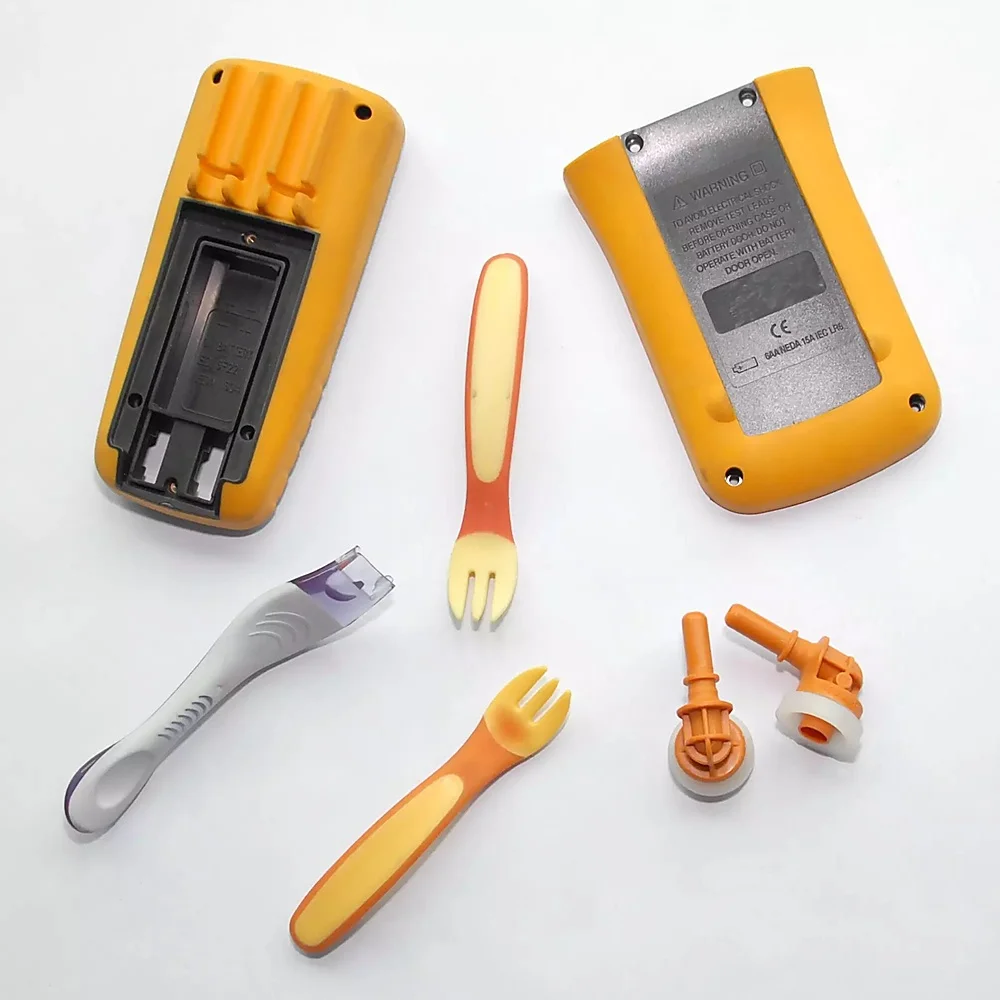
Combine Hard and Soft Materials
A common 2K molding application combines rigid plastic with soft TPE or TPU to create integrated soft-touch grips, flexible buttons, seals, anti-slip surfaces, impact protection, and ergonomic contact areas.
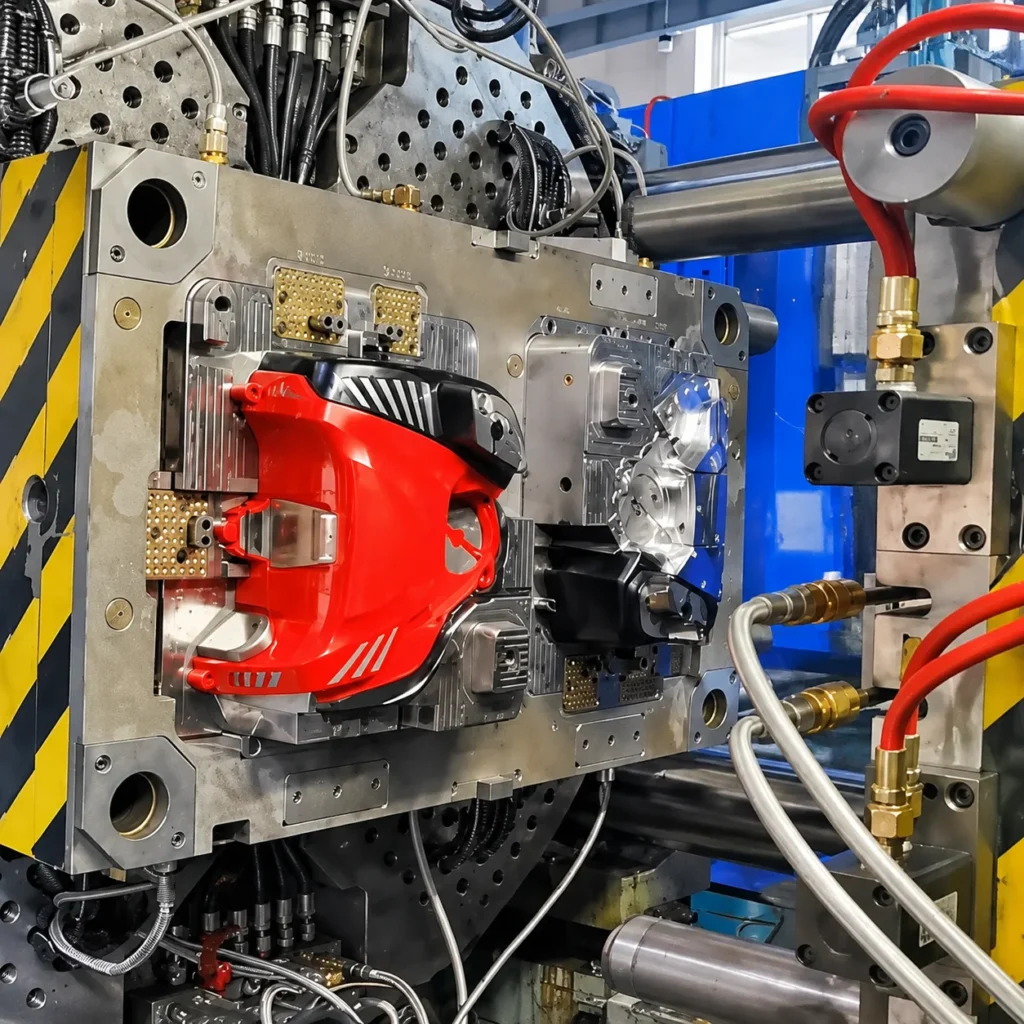
Mold Multiple Colors
Two-shot injection molding can combine different colors into a single finished component without relying entirely on painting, printing, or separate assembly.
This is useful for branding, control interfaces, visual indicators, decorative features, and multi-color product designs.
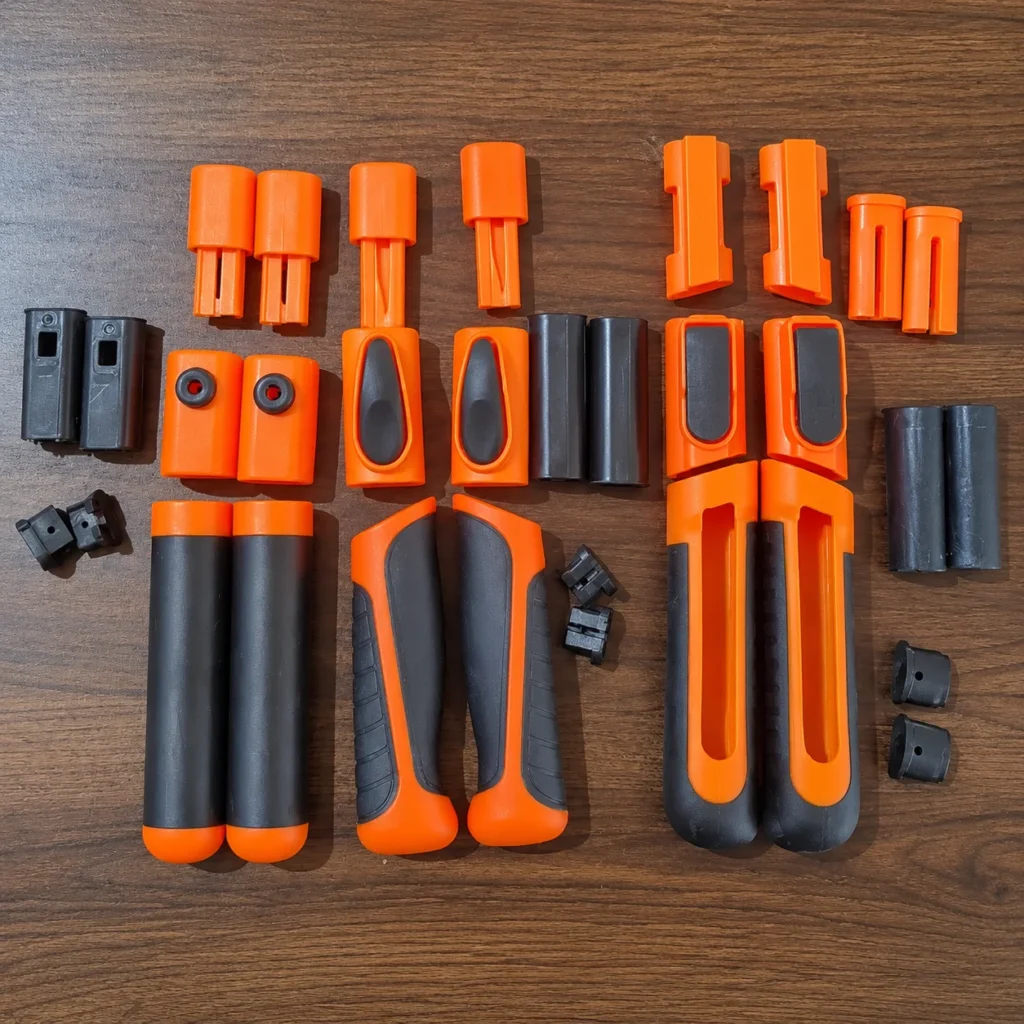
Reduce Assembly Operations
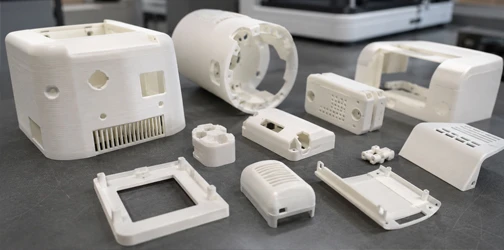
Features that would otherwise require separate molded components can sometimes be combined into one two-shot molded part.
This can reduce secondary assembly, fasteners, adhesives, alignment steps, and component handling.
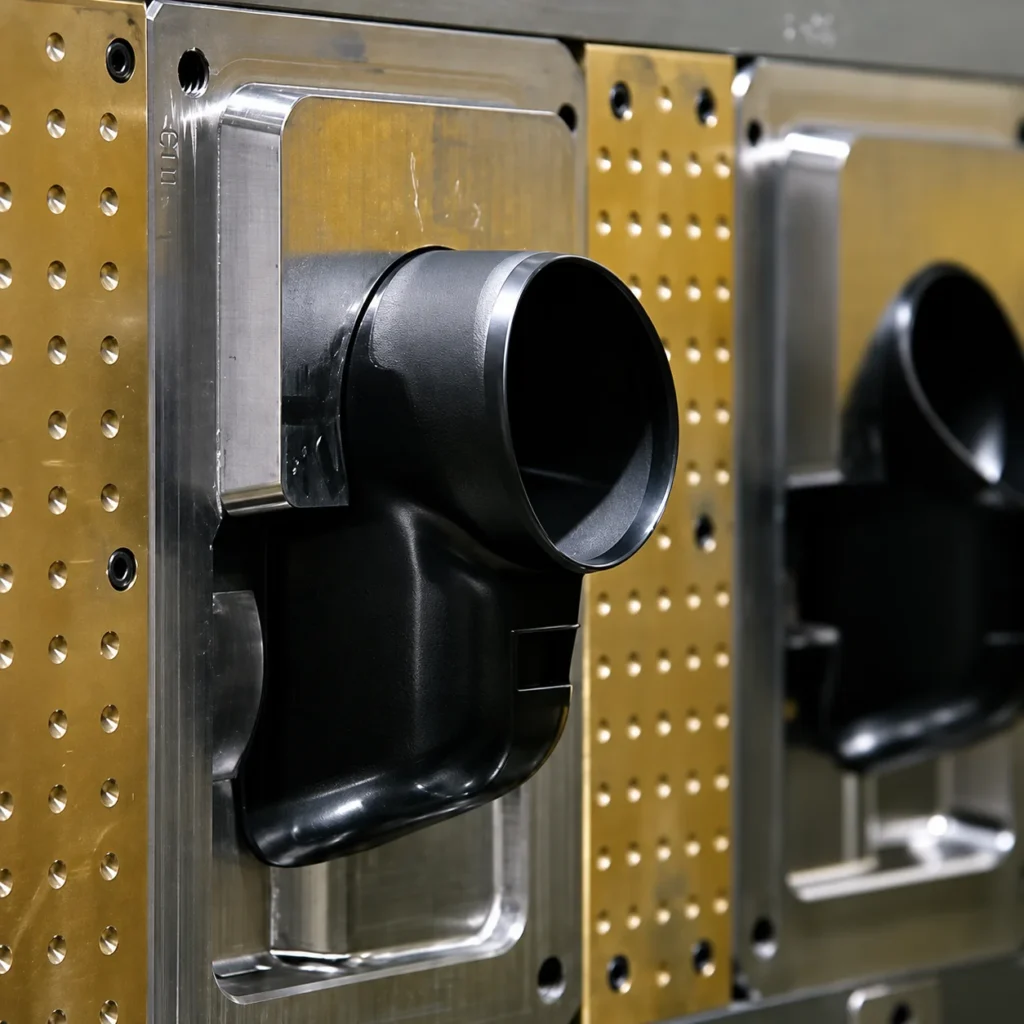
Improve Part Consistency
Because both shots are integrated into a controlled molding cycle, substrate positioning and material placement can be more repeatable than processes that require manual transfer between separate molding operations.
Two-Shot Materials and Part Design
Successful 2K injection molding depends on the relationship between both materials, the part geometry, mold design, and molding sequence. Material and tooling decisions should therefore be considered early in product development.
Material Compatibility
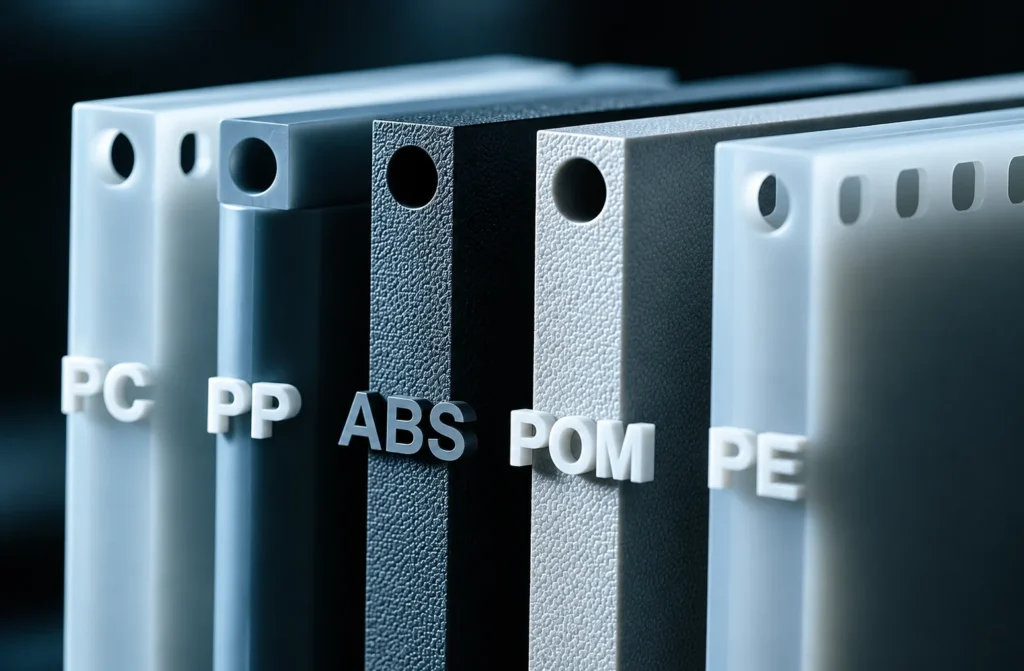
Two-shot molding can combine rigid plastics, elastomers, different colors, or materials with different functional properties.
Common first-shot materials include ABS, PC, PC/ABS, PP, PA/Nylon, and PBT, combined with compatible materials such as TPE, TPU, or other thermoplastics and elastomers.
Material selection should consider adhesion, melt temperature, shrinkage, hardness, chemical resistance, appearance, and product requirements.
Chemical & Mechanical Bonding
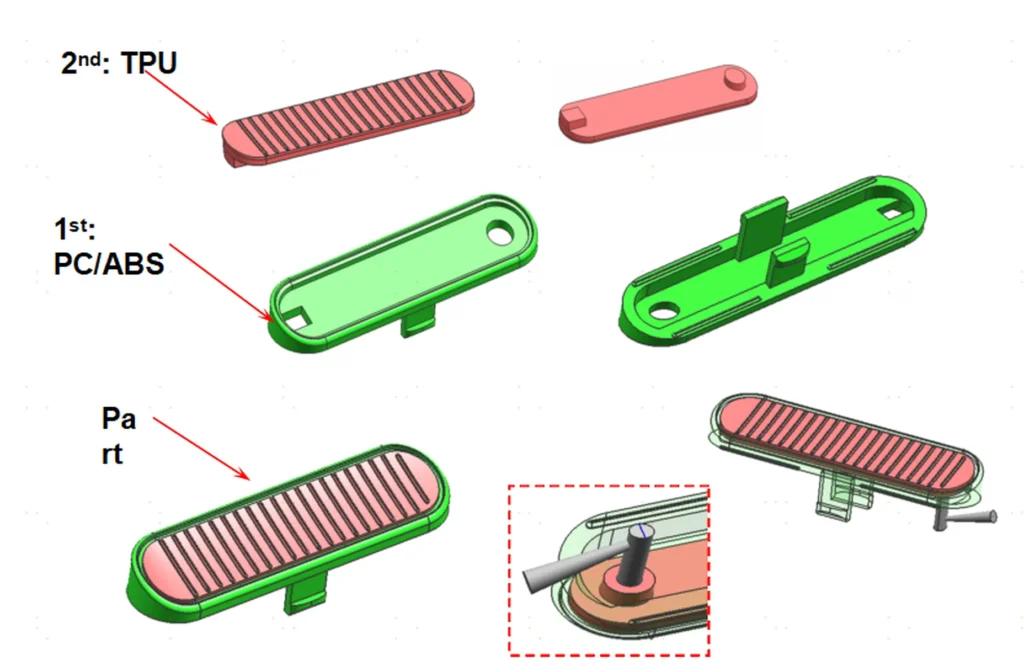
Compatible materials may form a chemical bond during the second shot.
Mechanical retention features such as grooves, holes, or interlocking geometry can also improve bonding strength when required.
Two-Shot Part Design
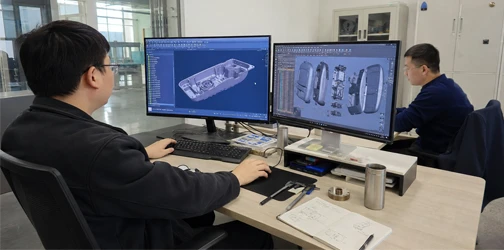
Our DFM review evaluates first- and second-shot geometry, wall thickness, material flow, draft, shut-offs, parting lines, bonding areas, shrinkage, ejection, cosmetic boundaries, and mold rotation or transfer requirements.
These factors directly affect two-shot tooling complexity, bonding performance, and final part quality.
Our Two-Shot Injection Molding Process
01
CAD & Application Review
Provide your 3D CAD files, materials, colors, quantities, tolerances, surface requirements, and functional specifications. Our engineers review whether two-shot molding is appropriate for the product.
02
Material & 2K DFM Review
The first and second materials are evaluated for compatibility, processing conditions, bonding, shrinkage, and product performance. Part geometry is reviewed for both molding stages.
03
Two-Shot Mold Design & Manufacturing
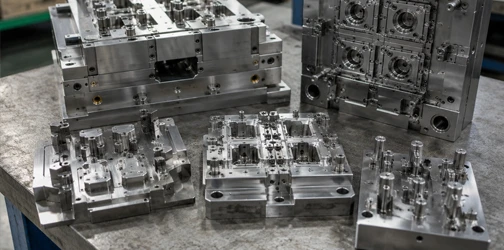
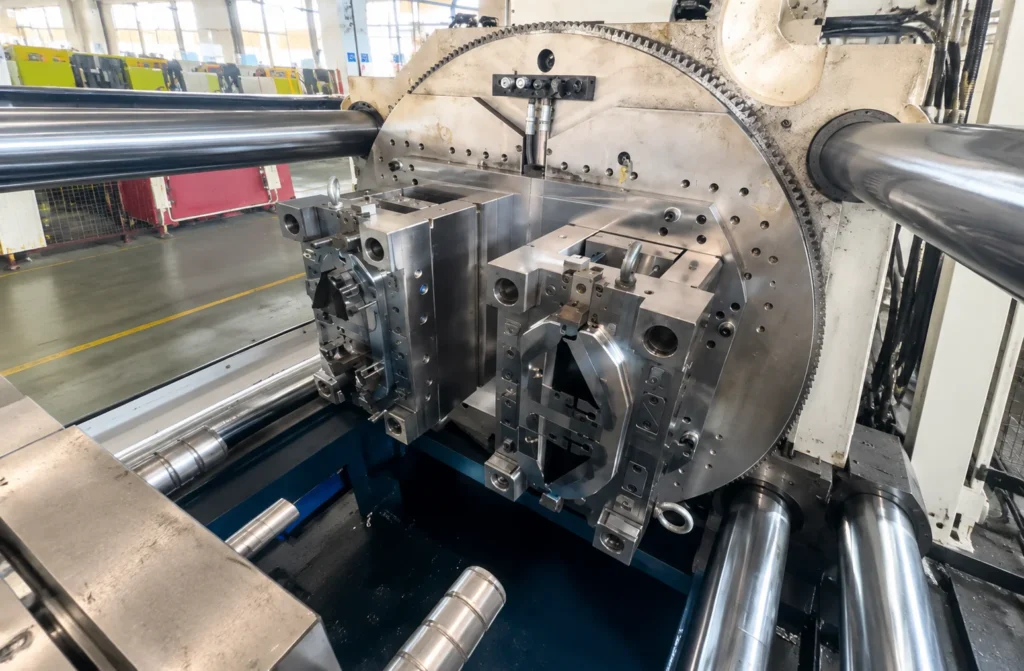
The mold is developed around the required injection sequence and material transfer strategy. Depending on the tooling design, the first-shot component may rotate or transfer into the second molding position within the mold.
04
T1 Sampling & Validation
Initial two-shot parts are evaluated for:
- Material bonding
- Dimensions
- Alignment
- Coverage
- Surface appearance
- Color boundaries
- Fit and assembly
- Flash
- Functional performance
Tooling and process parameters can then be refined where required.
05
Process Validation & Production
After sample approval, injection parameters, temperatures, timing, material conditions, and mold movements are established for stable production. Process monitoring and quality inspection help maintain consistent multi-material parts throughout production.
Need to Combine Two Materials or Colors in One Part?
Two-shot molding can simplify product architecture by integrating multiple materials, colors, and functions directly into one molded component.
Maidder can review your CAD files, materials, bonding requirements, production volume, appearance, and functional requirements to determine whether 2K injection molding is suitable for your project.
Two-Shot Molding for Production-Ready Products
Two-shot molding is particularly valuable for products where multiple materials must work together consistently across higher production volumes.
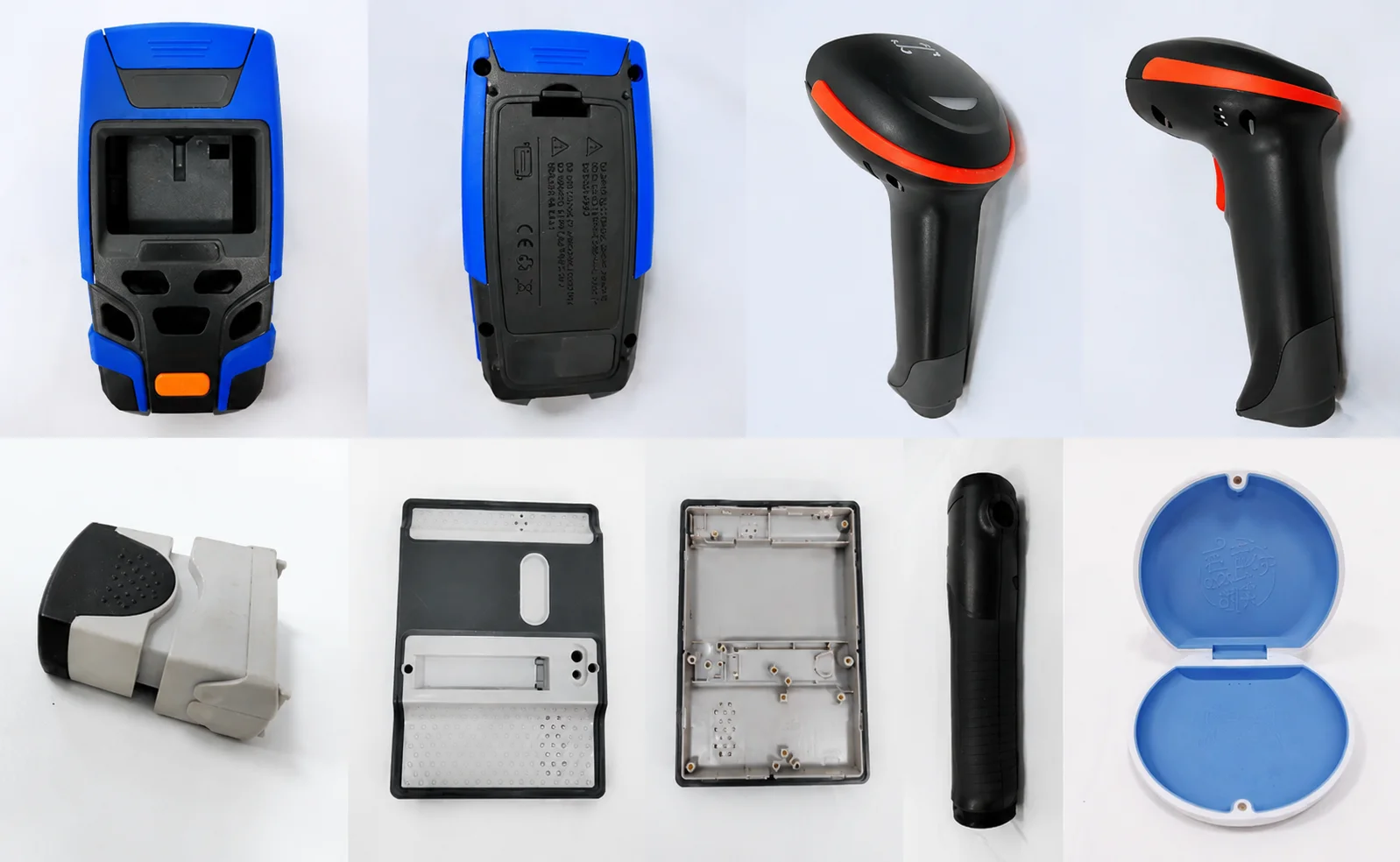
Soft-Touch & Ergonomic Products
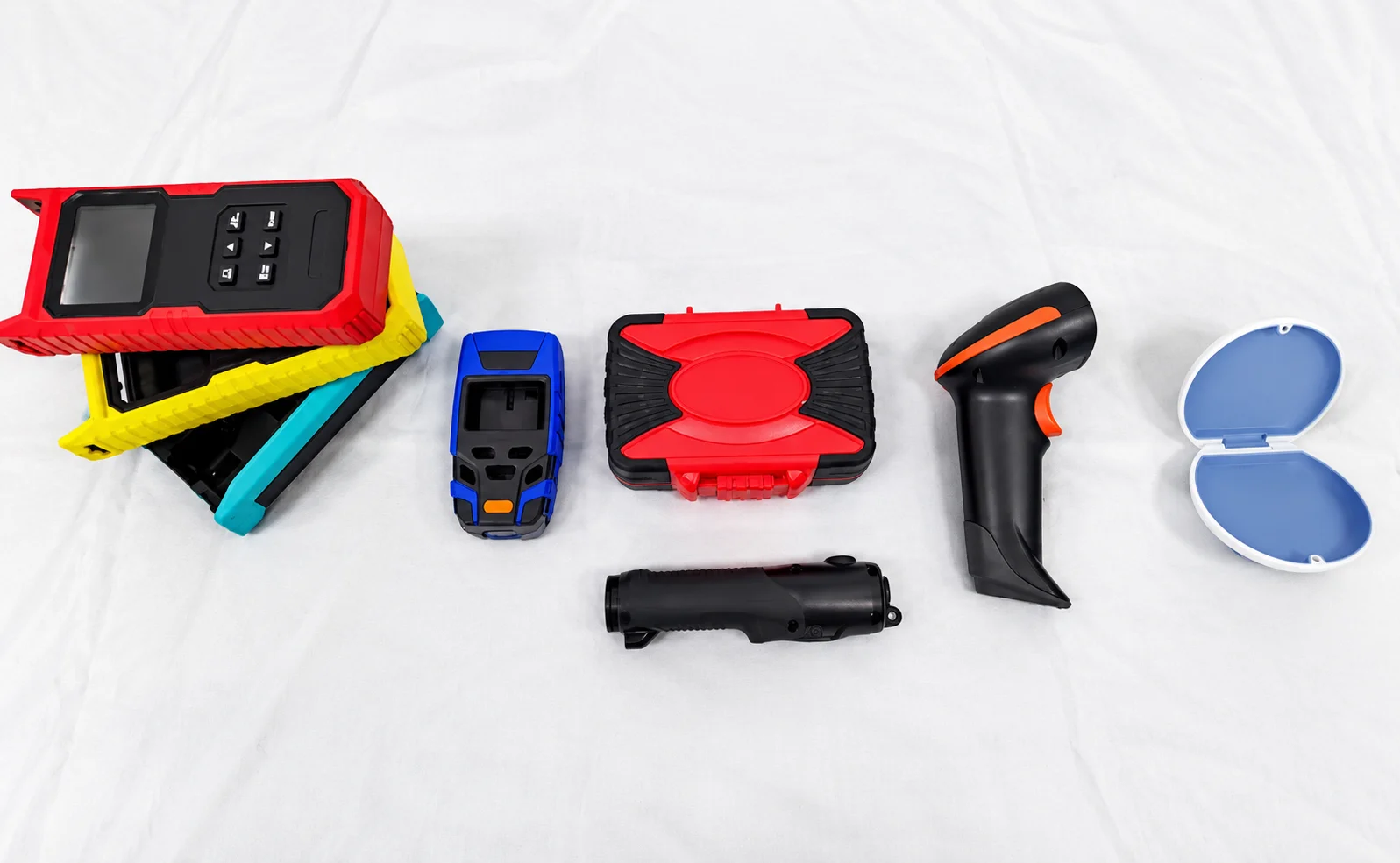
Rigid structures can be combined with softer surfaces for products such as:
- Tool handles
- Handheld devices
- Control interfaces
- Consumer electronics
- Appliance components
Sealing & Protective Features
Flexible secondary materials can form integrated sealing or protective zones around rigid components.
Applications may include buttons, edges, interfaces, covers, and other functional areas where soft and rigid materials need to work together.
Multi-Color Components
Two-color injection molding can create permanent color separation directly during molding.
This can be useful for:
- Branding
- Control buttons
- Icons
- Functional indicators
- Decorative product features
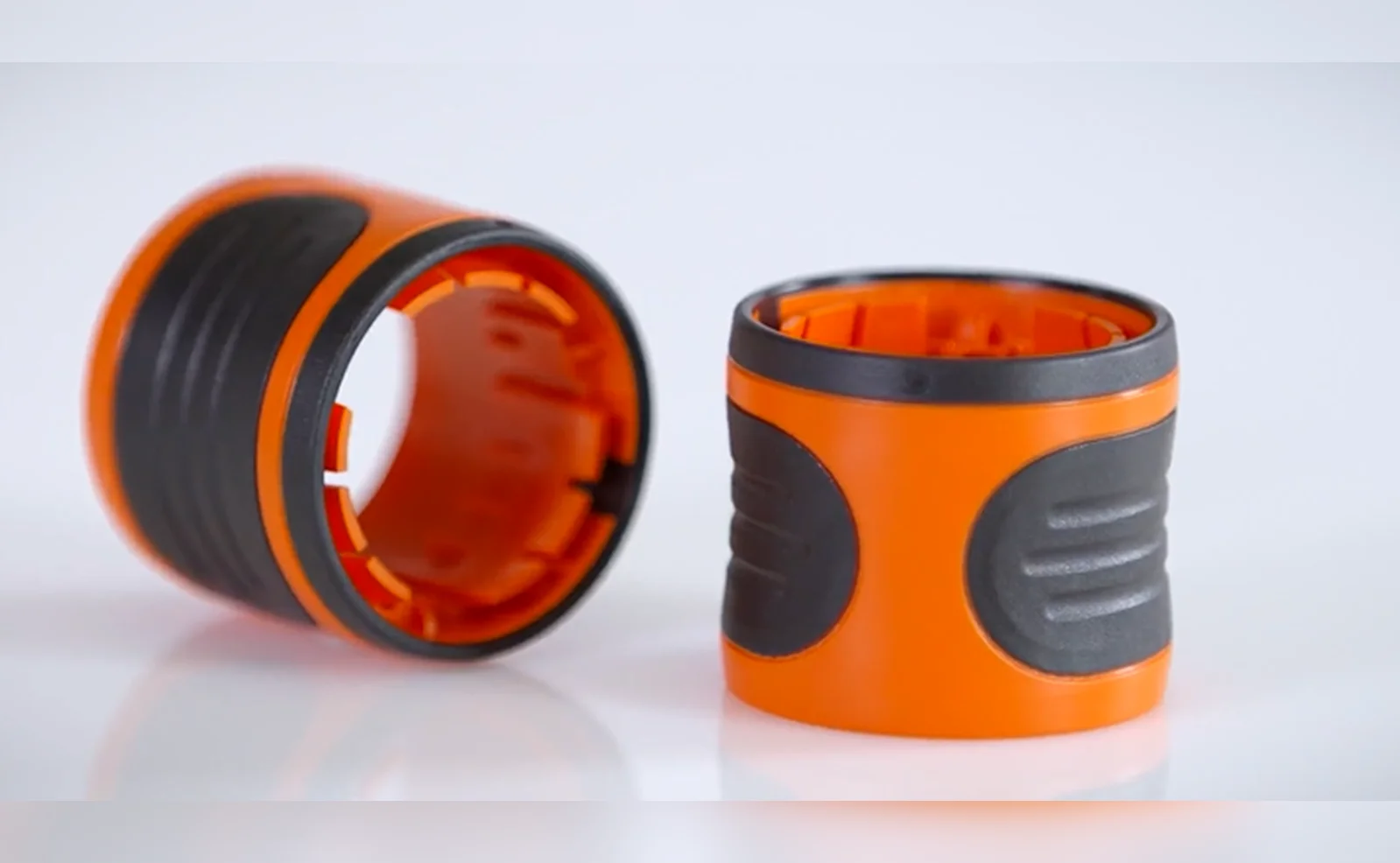
Integrated Functional Components
A single 2K molded part can combine rigid support, flexible interaction areas, sealing features, or visual elements that might otherwise require several separate components.
This makes two-shot molding especially useful for products designed for repeatable medium- to high-volume manufacturing.
From Two-Shot DFM to Stable Production
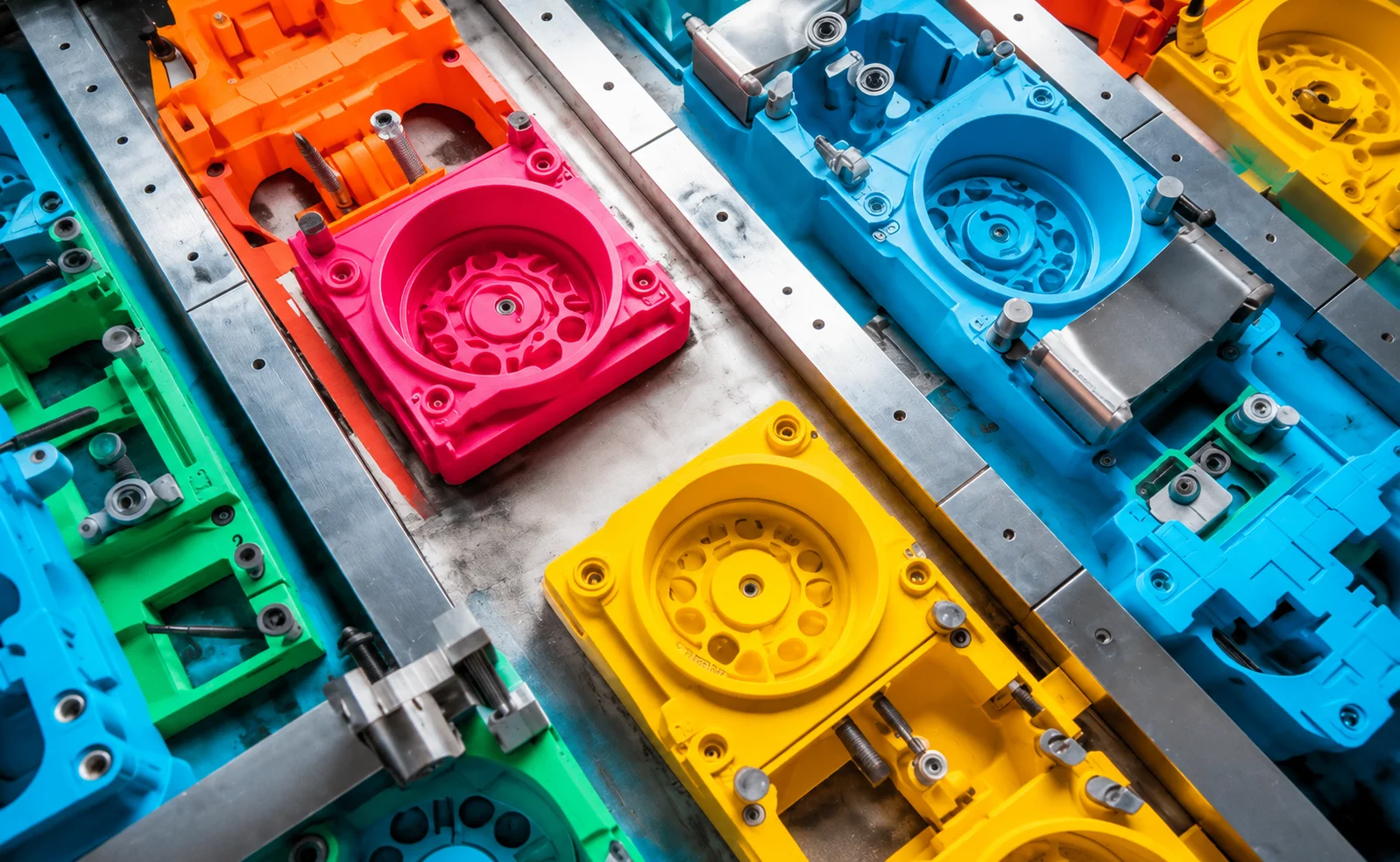
Two-shot injection molding requires close coordination between product design, material selection, specialized tooling, and molding parameters.
Maidder connects these stages within one production workflow:
Product Design → 2K DFM → Material Compatibility Review → Two-Shot Mold Design → Mold Manufacturing → T1 Sampling → Bonding & Functional Validation → Process Optimization → Two-Shot Injection Molding → Assembly → Mass Production
This coordinated approach helps reduce problems with material bonding, alignment, cosmetic boundaries, tooling, and production consistency before full-scale manufacturing.
Two-Shot Injection Molding FAQs
What is two-shot injection molding?
Two-shot injection molding is a manufacturing process that molds two different materials or colors into one integrated plastic component.
The first material is molded to form the initial substrate, and a second material is then injected in a subsequent molding stage within a coordinated production cycle.
The process is also commonly called 2K molding, double-shot molding, or two-component injection molding.
What is the difference between two-shot molding and overmolding?
Both processes combine multiple materials into one component, but their production methods can differ.
Traditional overmolding may mold the substrate separately and transfer it into another mold for the second molding operation.
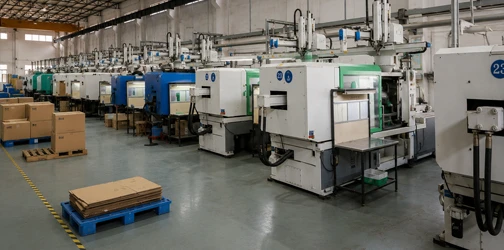
Two-shot molding typically uses specialized tooling and a molding machine with multiple injection units so both materials can be molded sequentially within an automated process.
Because 2K tooling and equipment are more complex, the process is generally more attractive for repeat production and higher quantities.
What materials can be used for 2K molding?
Two-shot molding can combine different rigid plastics, rigid and flexible materials, or different colors of compatible polymers.
Common material families may include ABS, PC, PC/ABS, PP, PA, PBT, TPE, and TPU.
The exact combination should be evaluated for adhesion, molding temperature, shrinkage, chemical resistance, hardness, and product requirements.
How do the two materials bond together?
Material bonding can occur through chemical adhesion, mechanical retention, or a combination of both.
Compatible resin combinations may form a strong bond during the second molding stage.
Where additional retention is required, the part can include holes, grooves, undercuts, or other mechanical interlocking features.
When should I choose two-shot molding instead of separate assembly?
Two-shot molding can be useful when a product requires two materials or colors in repeat production and integrating them during molding can reduce assembly or improve consistency.
It is particularly suitable for soft-touch grips, integrated seals, flexible buttons, multi-color components, and other products where multiple material functions need to be accurately positioned.
Can Maidder support two-shot molding from DFM through mass production?
Yes. Maidder can support two-shot DFM, material review, 2K mold design and manufacturing, T1 sampling, bonding validation, process optimization, injection molding, secondary operations, assembly, and mass production.
Contact Us
Have a product idea or manufacturing requirement? Our engineering team supports you from product development and rapid prototyping to custom injection molds, injection molding and mass production. Share your CAD files, drawings or project details, and we’ll help define the right solution.