
Rapid Injection Molding Services for Production-Grade Prototypes
Maidder provides rapid injection molding services for functional prototypes, design validation, pilot runs, bridge production, and low-volume manufacturing.
Using economical rapid tooling and production-grade thermoplastics, we produce parts that closely represent final molded products in material, appearance, assembly, and performance.
Validate Form, Fit and Function
Rapid injection molding helps bridge the gap between conventional prototyping and mass production while reducing technical and tooling risks.
3D printing, CNC machining, and urethane casting are effective for many prototype stages, but they do not always reproduce the material behavior and manufacturing characteristics of an injection-molded part.
Rapid injection molding allows you to evaluate your design using real molding processes and production-grade materials.
It is particularly useful for:
- Functional and mechanical testing
- Material validation
- Fit and assembly testing
- Surface and appearance evaluation
- Injection molding design validation
- Pilot and market-test production
- Low-volume plastic parts
- Bridge production before mass manufacturing
This provides higher-fidelity feedback before investing in long-life production tooling.
From CAD to Injection Molded Prototype Parts
Our rapid injection molding process combines engineering review, rapid tooling, molding, and validation to move designs efficiently toward production.
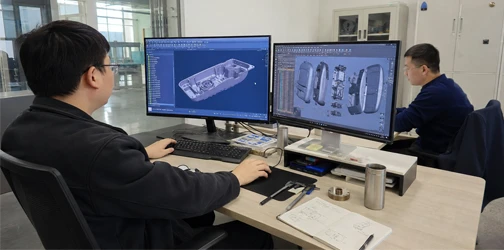
CAD & Requirements Review
Provide 3D CAD files, material requirements, quantities, surface finishes, tolerances, and validation goals.
DFM Review
Our engineers review wall thickness, draft, ribs, bosses, undercuts, parting lines, tolerances, assembly, and other molding requirements.
Rapid Tooling
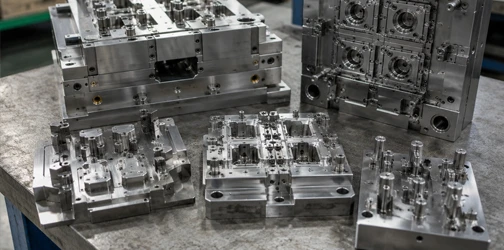
Tooling is developed based on part geometry, required quantities, testing objectives, and future production requirements.
T1 Samples & Validation
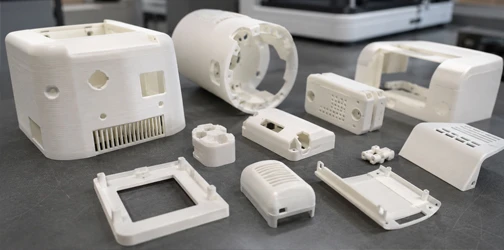
Initial injection molded samples are evaluated for dimensions, appearance, fit, assembly, material behavior, and specified functional requirements.
Prototype or Low-Volume Production
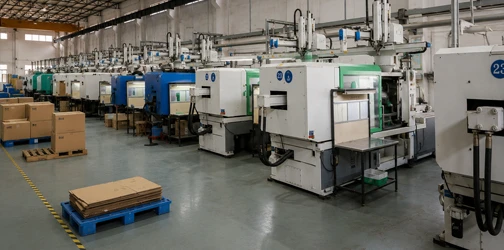
After sample approval, parts can be produced for functional testing, pilot builds, market validation, or bridge production.
Ready to Validate Your Product with Injection Molded Parts?
If CNC or 3D printed prototypes can no longer provide the material or manufacturing fidelity your project requires, rapid injection molding may be the next step.
Send Maidder your CAD files, material requirements, quantities, and validation goals. Our engineers can review the design for moldability and recommend an appropriate rapid molding approach.
Rapid Injection Molding for Testing and Low-Volume Production
Rapid injection molding supports development stages where production-like parts are required without immediately committing to full-scale manufacturing.
It can be used for functional testing, certification samples, engineering builds, customer evaluation, pilot production, market testing, and low-volume product launches.
Because parts are produced through injection molding, you can evaluate characteristics that may be difficult to reproduce accurately with other prototype processes, including:
- Production material behavior
- Snap-fits and living features
- Molded surface quality
- Assembly performance
- Dimensional repeatability
- Mechanical performance
- Product appearance
For projects that require molded parts while production tooling is still being prepared, rapid tooling can also support bridge production.
Feedback from rapid molded parts can be used to refine:
- Plastic part geometry
- Materials
- Tolerances
- Assembly features
- Surface requirements
- Moldability
- Tooling strategy
From Rapid Injection Molding to Mass Production
Rapid injection molding is most valuable when prototype results can be carried directly into production engineering.
Maidder connects rapid molding with DFM, mold design, mold manufacturing, injection molding, assembly, and mass production.
Rapid tooling and pilot injection molding allow the design, material, tooling strategy, and molding requirements to be validated before investing in production tooling. Once validation is complete, the project can move into production tooling and scalable injection molding with fewer design changes.
Rapid Injection Molding FAQs
What is rapid injection molding?
Rapid injection molding is a prototype and low-volume manufacturing process that uses quickly produced tooling to manufacture real injection-molded plastic parts.
It is commonly used when product teams need production-grade materials and molded part characteristics for functional testing, design validation, pilot production, or bridge manufacturing before mass production.
When should I use rapid injection molding instead of 3D printing or CNC machining?
Rapid injection molding is most useful when you need to validate the actual injection molding process, production-grade plastic materials, molded surfaces, assembly features, or production-like product performance.
3D printing is typically better for very fast early design iterations, while CNC machining is useful for accurate prototypes in solid engineering materials.
What materials can be used for rapid injection molding?
Rapid injection molding can use many thermoplastics also used in production molding.
Depending on the product requirements, materials may include ABS, PC, PC/ABS, PP, PE, PA/Nylon, POM, PBT, PMMA, TPU, TPE, and other engineering plastics.
Material selection should be based on mechanical performance, appearance, temperature, chemical resistance, flexibility, and final product requirements.
Is rapid injection molding suitable for low-volume production?
Yes. Rapid injection molding can be suitable for pilot runs, market testing, bridge production, and low-volume manufacturing where injection-molded parts are required but full production tooling is not yet appropriate.
The best tooling strategy depends on part geometry, required quantity, material, expected mold life, and future production plans.
Can Maidder move from rapid injection molding to mass production?
Yes. After rapid molded parts are tested and the design is validated, Maidder can continue with DFM, production mold design, mold manufacturing, T1 sampling, injection molding, assembly, and mass production.
This allows design and manufacturing feedback from the prototype stage to carry forward into production.
Contact Us
Have a product idea or manufacturing requirement? Our engineering team supports you from product development and rapid prototyping to custom injection molds, injection molding and mass production. Share your CAD files, drawings or project details, and we’ll help define the right solution.