
Mold Flow Analysis Services for Injection Molding
Predict how plastic will fill, pack, cool, and behave inside the mold before tooling is manufactured.
Maidder provides mold flow analysis services to identify potential injection molding risks and support better part, gate, runner, cooling, and mold design decisions before steel cutting.
What Mold Flow Analysis Can Evaluate
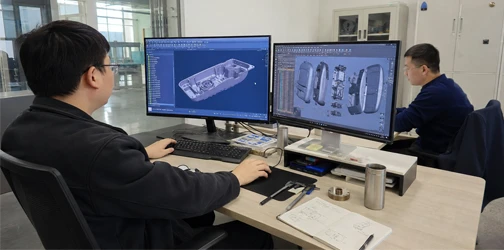
Mold flow analysis creates a digital simulation of how molten plastic behaves throughout the injection molding process. The results help engineers understand whether a proposed product and mold design can fill consistently and where manufacturing risks may occur.
Using injection molding simulation, our engineering team can evaluate material flow, filling pressure, weld lines, air traps, temperature distribution, cooling behavior, shrinkage, and potential warpage. By identifying these risks early, mold flow analysis helps reduce unnecessary tooling changes and supports a smoother transition from mold design to T1 sampling and production.
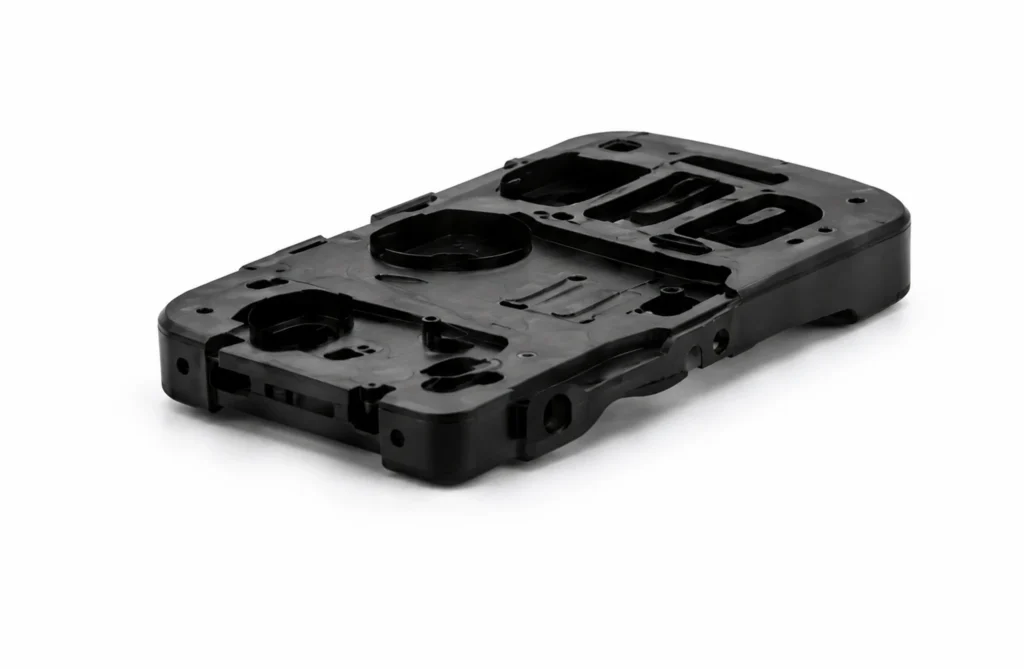
Filling & Flow Analysis
Filling analysis predicts how molten plastic flows through the runner, gate, and mold cavity.
It can help evaluate:
- Fill pattern
- Fill time
- Flow balance
- Injection pressure
- Pressure drop
- Difficult-to-fill areas
- Short-shot risk
- Material flow behavior
For multi-cavity molds, balanced filling is particularly important for maintaining consistent parts between cavities.
Gate Location & Runner Analysis
Gate location directly affects how plastic enters and fills the cavity.
Simulation can help compare gate positions, runner configurations, and flow paths to improve filling balance and reduce excessive pressure.
Gate analysis can also help identify potential effects on weld lines, cosmetic areas, and part quality before the tooling layout is finalized.
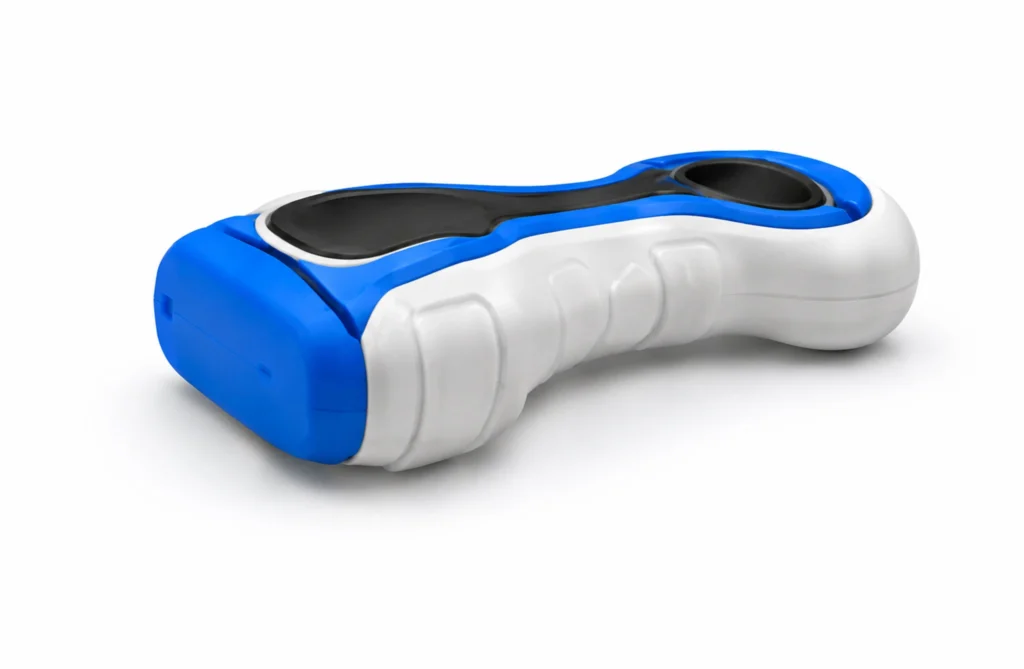
Weld Lines & Air Traps
When separate flow fronts meet, weld or knit lines may form.
Their location can affect appearance and, in some applications, structural performance.
Mold flow analysis can also predict areas where trapped air may occur, allowing engineers to review gate locations, vents, geometry, and other tooling conditions before mold manufacturing.
Cooling & Warpage Analysis
Uneven cooling and shrinkage can cause dimensional variation or warpage after molding.
Simulation can evaluate temperature distribution and predicted deformation to help engineers identify areas that may require design, cooling, material, or processing changes.
Our Mold Flow Analysis Process
Mold flow analysis is most valuable before final mold design and mold manufacturing, while design changes are still relatively easy to make.
01
CAD & Material Review
We review the 3D CAD model together with:
- Plastic material
- Part geometry
- Wall thickness
- Expected tolerances
- Surface requirements
- Mold concept
- Production requirements
Accurate material and geometry information improves the relevance of the simulation.
02
Simulation Setup
The injection molding simulation is prepared using the proposed part geometry, material properties, gate strategy, runner system, and relevant process conditions.
Different design or gate options can be compared when required.
03
Filling & Pressure Analysis
The simulation evaluates how the material fills the cavity and how pressure develops throughout the flow path.
Potential problems such as incomplete filling, excessive pressure, unbalanced flow, weld lines, or air traps can be identified.
04
Cooling & Warpage Evaluation
Where required, cooling and dimensional behavior can also be evaluated.
This helps identify uneven temperature distribution, differential shrinkage, and potential part deformation before tooling is finalized.
05
Engineering Recommendations
Simulation findings are reviewed together with the part and mold design.
Recommendations may include changes to:
- Gate location
- Runner configuration
- Wall thickness
- Part geometry
- Material
- Cooling layout
- Mold structure
- Processing strategy
The optimized design can then move forward into detailed mold engineering and manufacturing.
Optimize Your Mold Before Steel Cutting
Maidder can use mold flow analysis to evaluate filling, pressure, gate location, weld lines, air traps, cooling, and warpage before tooling release.
Our engineering, mold design, mold making, and injection molding teams can then use the simulation results to support practical tooling decisions.
Mold Flow Analysis for Better Mold Design
Mold flow simulation should support real engineering decisions rather than exist only as a simulation report. At Maidder, analysis results can be coordinated directly with mold design and tooling development.
Gate & Runner Optimization
Flow analysis can compare how different gate positions and runner layouts affect filling balance, pressure, flow length, and defect locations.
This information helps mold engineers select a more appropriate feeding strategy before mold manufacturing.
Cooling Optimization
Cooling strongly affects cycle time, shrinkage, dimensional stability, and warpage.
Simulation results can help identify areas with uneven temperature behavior and support improvements to cooling channel design.
Material Comparison
Different thermoplastics can behave differently during injection molding because their viscosity, shrinkage, thermal properties, and processing requirements vary.
Where appropriate, mold flow simulation can compare how different materials may influence filling and part behavior.
Multi-Cavity Mold Balance
For multi-cavity molds, each cavity should fill as consistently as possible.
Mold flow analysis can help evaluate runner balance and cavity filling so that pressure and filling differences can be addressed before tooling is manufactured.
From Mold Flow Simulation to Tool Validation
Mold flow analysis predicts manufacturing behavior before the physical mold exists, but actual tooling still needs to be tested and validated. Maidder connects simulation results with mold manufacturing and injection molding trials.
Before Mold Manufacturing
Simulation findings can support decisions involving:
- Part geometry
- Gate locations
- Runner system
- Cooling
- Material selection
- Venting considerations
- Mold structure
These decisions can be incorporated into the final mold design before machining begins.
T1 Sample Validation
After the mold is manufactured, T1 samples provide physical confirmation of molded part behavior.
The engineering team can compare actual results with expected filling, appearance, dimensions, shrinkage, and warpage.
Process Optimization
T1 results can also be used to refine molding parameters such as:
- Injection speed
- Injection pressure
- Holding pressure
- Melt temperature
- Mold temperature
- Cooling time
Tooling or process adjustments can then be completed before production approval.
Analysis-to-Production Workflow
A typical Maidder workflow can include:
DFM → Mold Flow Analysis → Mold Design Optimization → Mold Manufacturing → T1 Sampling → Tool Optimization → Process Validation → Production Injection Molding → Mass Production
This allows simulation, tooling, and real molding results to remain connected throughout product development.
Mold Flow Analysis FAQs

What is mold flow analysis?
Mold flow analysis is a computer-based simulation used to predict how molten plastic will flow, fill, pack, cool, and behave inside an injection mold.
It can help engineers evaluate gate locations, filling patterns, pressure, weld lines, air traps, cooling, shrinkage, warpage, and other injection molding conditions before the mold is manufactured.
When should mold flow analysis be performed?
Mold flow analysis is most useful before final mold design and mold manufacturing.
Performing the analysis before steel cutting allows potential product, gate, runner, cooling, or tooling changes to be made before significant tooling investment has already occurred.
It may also be used when an existing mold or molded part has persistent filling, warpage, or quality problems.
Does every injection molded part need mold flow analysis?
Not necessarily.
Simple parts with predictable geometry may not require the same level of simulation as large, thin-wall, complex, multi-cavity, appearance-critical, or tight-tolerance parts.
The need for mold flow analysis should be evaluated according to part complexity, material, tooling investment, quality requirements, and manufacturing risk.
What problems can mold flow analysis identify?
Depending on the analysis scope, mold flow simulation can help identify potential issues such as:
- Short shots
- Unbalanced filling
- Excessive injection pressure
- Weld or knit lines
- Air traps
- Sink-related risks
- Uneven cooling
- Shrinkage
- Warpage
- Multi-cavity imbalance
The results can then be used to guide product or mold design changes.
What is the difference between mold flow analysis and DFM?
DFM reviews whether the plastic part is designed appropriately for manufacturing, including wall thickness, draft, undercuts, ribs, bosses, tolerances, and other moldability considerations.
Mold flow analysis uses computer simulation to predict how the selected plastic material may behave during injection molding.
DFM provides broader manufacturability review, while mold flow analysis provides deeper process simulation for selected molding risks.
What is the difference between mold flow analysis and mold design?
Mold flow analysis simulates plastic flow, pressure, cooling, and related molding behavior.
Mold design develops the actual physical tooling structure, including cavity and core, runners, gates, cooling channels, ejectors, slides, lifters, and mold components.
The mold flow results can therefore be used to support and optimize mold design decisions.
Can Maidder continue from mold flow analysis to mold making and production?
Yes. Maidder can continue from DFM and mold flow analysis through mold design, mold manufacturing, T1 sampling, mold optimization, injection molding, secondary operations, assembly, and mass production.
This provides a continuous path from simulation and tooling engineering to stable production.
Contact Us
Have a product idea or manufacturing requirement? Our engineering team supports you from product development and rapid prototyping to custom injection molds, injection molding and mass production. Share your CAD files, drawings or project details, and we’ll help define the right solution.